
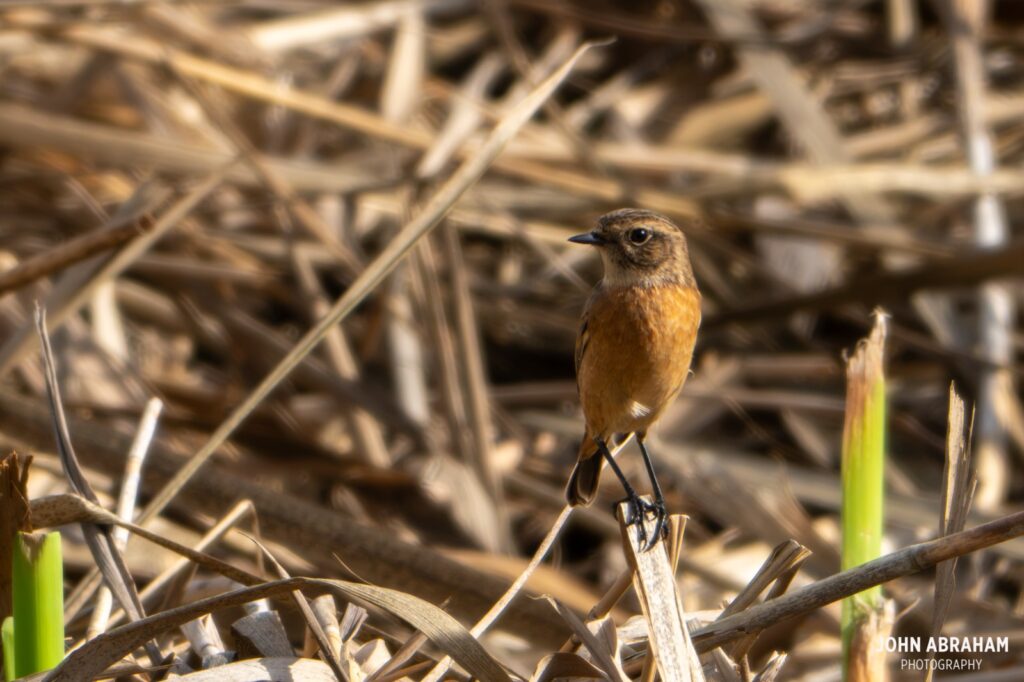
A Stonechat at Rutland Water
A visit to Rutland Water offers plenty of opportunities to enjoy wildlife, and seeing a stonechat was a lovely reminder to look beyond the water itself. Sometimes, a small bird among the reeds can be just as rewarding as the larger birds on the lagoons. Stonechats have plenty of character. They often perch on the tops of bushes, tall stems or fence posts, watching the ground before dropping down to catch insects. These exposed perches give you a chance to appreciate them—and, with a little patience, take a photograph.
A Small Bird Worth Noticing
The male stonechat has a dark head, white patches at the sides of its neck and a warm orange breast. Females have softer brown colouring, with a more subtle orange wash across the chest. Their name comes from their distinctive call, which sounds like two small stones being tapped together. Listening as well as looking can help you notice a bird you might otherwise walk past.
Photographing the Stonechat
Stonechats are fast flyers with erratic flight pattens, so it is best to watch the surroundings and then concentrate on that area, get focus and take a shot before it darts off again. Use a fast shutter speed of at least 1/1000s if there is enough light to avoid using a very high ISO value.
Enjoying the Small Moments
One of the pleasures of wildlife photography is learning to appreciate the everyday encounters. A stonechat may not draw the crowds that a rare visitor attracts, but it is still worth stopping for. Seeing one at Rutland Water added another memorable moment to the visit. It was a chance to slow down, watch carefully and enjoy a small bird going about its day. Rutland Water has plenty to offer on any visit, but the stonechats near Shoveler hide made this one memorable.
“Sometimes, the smallest birds leave the biggest impression.”