
Magpie: A Quiet Standoff at Rutland Water
Who Is Watching Whom?
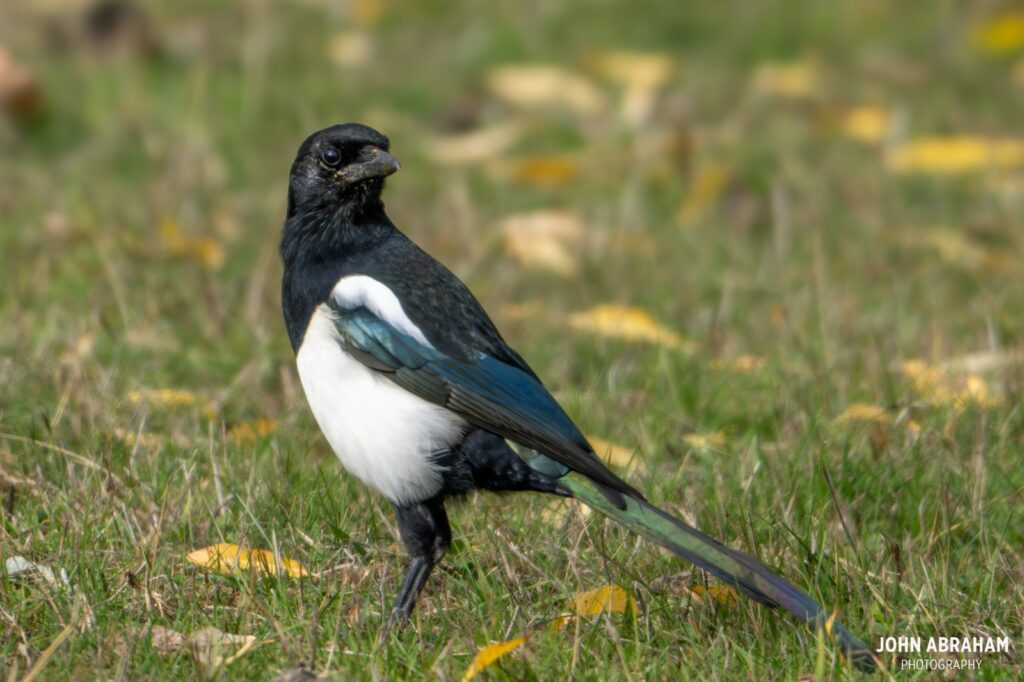
Sometimes a wildlife encounter becomes memorable because, for a moment, the watching seems to go both ways. During a visit to Rutland Water, I spotted a magpie that appeared just as interested in me as I was in it. I do not see magpies very often, so I stopped to take a closer look. The magpie looked back. What followed was a quiet staring standoff, with each of us seemingly trying to work out what the other was doing.
There is something gently amusing about lifting a camera towards a bird and finding it already watching you. I had stopped to photograph the magpie, but its direct gaze made me feel as though I was the subject under inspection. Of course, I could not know what it was thinking. Even so, it was easy to imagine a question behind that watchful eye: “What exactly are you doing?”. That exchange gives the photograph much of its character. The magpie’s body faces across the frame, while its head turns towards the camera, bringing the encounter back to that shared look.
More Than Black and White
At first glance, a magpie might seem to offer a simple combination of black and white. Looking more closely at this photograph reveals much more, particularly across the folded wing and long tail. Blue and turquoise tones show through the wing feathers, while the tail carries a greenish sheen. These colours add detail to the darker plumage and reward a little time spent looking. The white feathers stand out against the grass, with scattered yellow leaves bringing touches of warmth to the setting. Behind the bird, the softer background allows its shape and feather detail to hold attention.
Photographing a Watchful Bird
An encounter like this offers a chance to think about the eye as the centre of a wildlife portrait. When a bird looks towards the camera, careful focus on the eye helps preserve that sense of connection. It also pays to leave room for the whole bird. A magpie’s long tail is a strong part of its outline, and including it gives the photograph a pleasing sweep from the head down through the frame. With bright white feathers beside dark plumage, check that the whites still retain detail. Work from a comfortable distance and let the bird decide how long the encounter lasts; there is no need to move closer when its posture and surroundings already tell the story.
Taking Time to Look
Because I do not see magpies very often, this one gave me a reason to pause. What might be a familiar bird to someone else became the focus of my visit for those few moments. Photography encourages that closer attention. The turn of a head, the colours along a wing and the small highlight in an eye can become as interesting as the wider scene. Here, though, it was the mutual watching that made the encounter memorable. I was looking carefully at the magpie, and it certainly appeared to be keeping an eye on me.
Taking Time to Notice
A Look to Remember
The photograph holds that brief standoff: a magpie among grass and fallen leaves, its head turned towards the person behind the camera. I came away with a portrait of the bird and a small unanswered question about which of us had been the more curious.