
Red Kite: The Bird That Thought It Was an Osprey
At Horn Mill Trout Farm, the ospreys from Rutland Water are usually the birds associated with catching trout. On this occasion, however, a red kite took a turn, sweeping low over the water and leaving with a fish held beneath it. Perhaps nobody had told it that it was supposed to be an osprey. Whatever its thoughts on the matter, the photographs show a successful fishing trip and a lovely opportunity to see a familiar bird doing something unexpected.
An Unexpected Fisherman
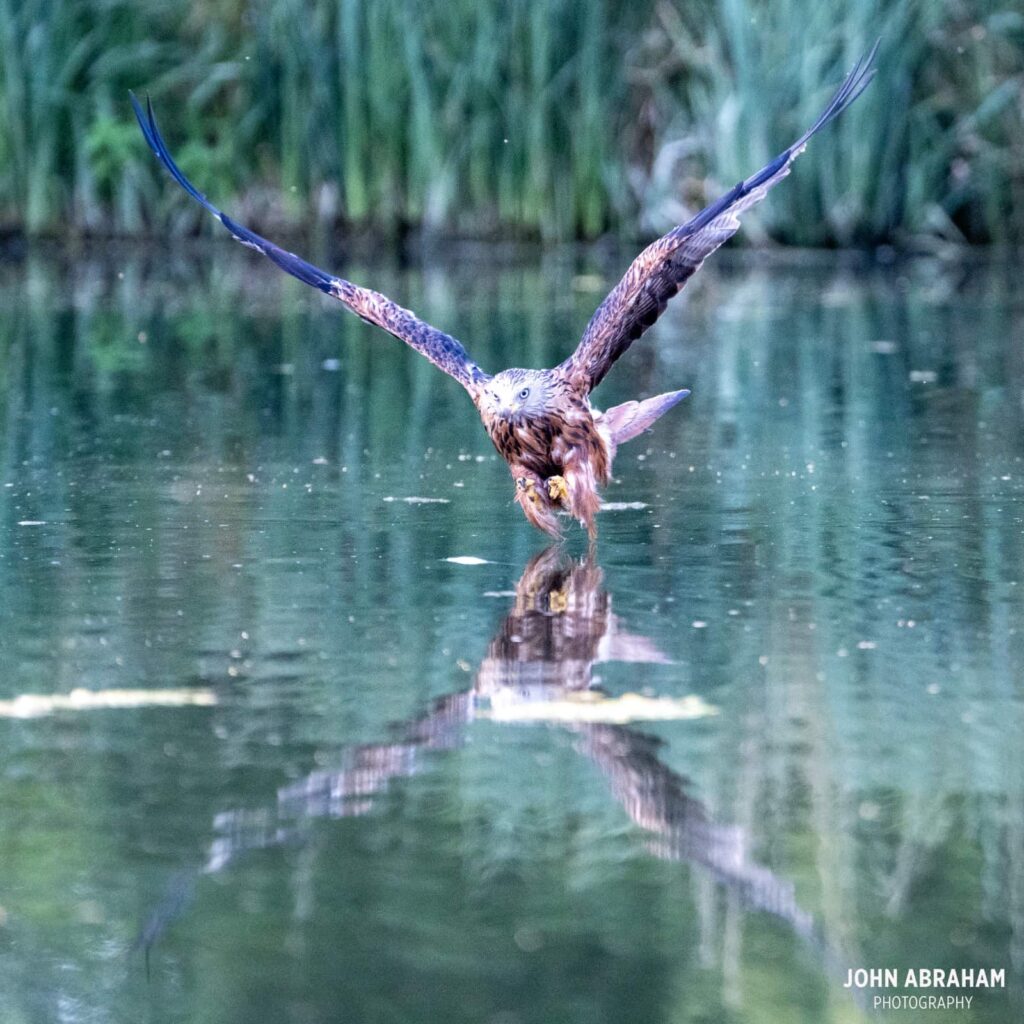
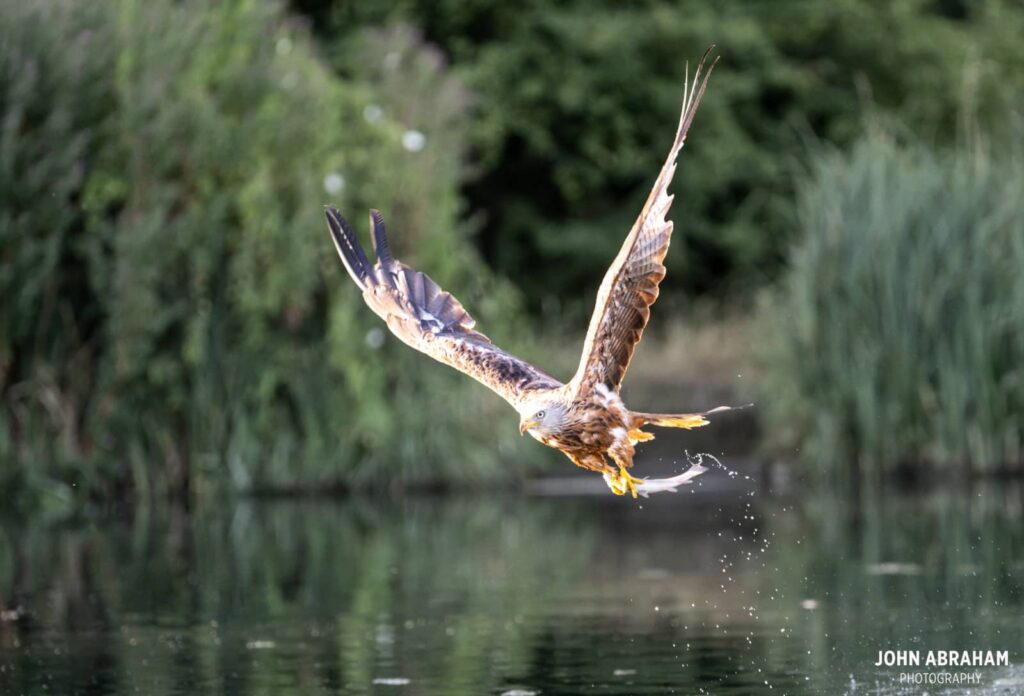
Red kites are often seen gliding above the countryside, their forked tails making small adjustments as they turn. They mainly feed on carrion, which makes this encounter an interesting contrast to their more familiar feeding habits. Here, the attention is firmly on the water. With its wings raised and feet reaching forwards, the kite is photographed just above the surface, its reflection stretching beneath it. The second photograph completes the story. A trout is held in its yellow talons, while a trail of droplets falls towards the pond.
Wings, Water and Reflections
There is plenty to notice beyond the catch itself. The kite’s pale head stands out against its richly patterned body, while the long feathers at its wingtips spread against the softer green background. In the photograph taken close to the surface, the reflection adds another shape to the composition. It gives a sense of how low the bird is flying and connects it with the water beneath.
Photographing the Action
Photographing a bird moving low over water calls for both preparation and room to react. Following its approach through the viewfinder helps you keep pace, while leaving a little space around it allows for sudden changes in wing position. Continuous autofocus and a fast shutter speed can help keep the bird sharp. A short burst may capture several stages of the movement, giving you a choice between the approach, the catch and the departure. Framing deserves attention too. Wide wings can quickly reach the edge of a photograph, and a reflection may extend much farther down than expected. Working from a suitable distance and following the site’s viewing guidance gives the bird room to behave naturally.
Looking Beyond the Expected
Wildlife photography often begins with an idea of what we hope to see. At a trout farm visited by red kites, it would be easy to concentrate entirely on those anticipated arrivals. This encounter offers a reason to keep watching everything else as well. A different bird can bring its own small story, even in a setting already associated with a particular species. The two photographs work especially well together because they show that story unfolding. One holds the low approach and reflection; the other reveals the catch, with water still falling behind.
A Trout to Take Away
The humour lies in the setting: a red kite apparently trying its wings at the ospreys’ fishing spot. It is an affectionate comparison, made all the better by the fish carried away beneath it. Once the kite has left the frame, the photographs retain those small details – the outstretched talons, the curved wings and the last bright droplets returning to the pond.